The bedroom is the most personal room in your home — and often the slowest to pack because people underestimate how much is actually in there. Start with your bedroom at least five to seven days before move day, work in a deliberate order (furniture last, soft goods first), and you'll finish faster and arrive more organized than you expect.
Why the bedroom always takes longer than you think
We've helped thousands of families move over the years, and the bedroom is the room that consistently surprises people. It looks simple — a bed, a dresser, a closet — but by the time you account for clothing, bedding, jewelry, electronics, toiletries, and sentimental items, the average master bedroom fills eight to fourteen medium boxes before furniture is even touched.
The second trap is leaving it for last. After you've exhausted yourself packing the living room and the kitchen, the bedroom becomes a frantic midnight session. Don't let that happen. Treat the bedroom as its own project with its own timeline.
Step 1: Declutter before you pack a single box
Before you pull out one roll of tape, make three piles: keep, donate, and discard. Clothes you haven't worn in a year, duplicate bed sets, random cables — these are moving weight you're paying for. Our guide on how to declutter before a move walks through this in detail, but the short version: if you wouldn't buy it again today, don't pay to move it.
A single garbage bag of donated clothes can eliminate half a box. At a typical local moving rate of $120–$180/hour for a two-person crew, less stuff is real money saved.
Step 2: Gather your supplies first
Running out of boxes mid-pack wastes an hour of momentum. For a standard master bedroom, plan on:
- 8–12 medium boxes (1.5 cubic ft) for folded clothes, books, and small items
- 3–4 large boxes (3–4.5 cubic ft) for pillows, comforters, and bulky soft goods
- 2–3 wardrobe boxes (with hanging bars) for hanging clothes
- 1 small box or two for fragile items (jewelry, framed photos, lamps)
- Mattress bag (queen: ~$15–25, king: ~$20–35) — non-negotiable for protecting your mattress
- Stretch wrap for dressers, nightstands, and bundling loose furniture hardware
- Zip-lock bags for screws, bolts, and small parts — tape them directly to the furniture piece they came from
Step 3: Pack in this exact order
Clothes hanging in the closet
Wardrobe boxes are the fastest, cleanest way to move hanging clothes — no folding, no wrinkling. Load a wardrobe box in about two minutes by sliding a section of hanging garments directly in. One wardrobe box holds roughly 20–24 inches of hanging clothes.
No wardrobe boxes? Bundle 10–15 items together still on their hangers, wrap a garbage bag around them from the bottom up with hangers poking through the tied opening. It works almost as well and costs nothing.
Folded clothing and dresser contents
You have two solid options here:
| Method | Best for | Trade-off |
|---|---|---|
| Leave clothes in the dresser drawers | Heavy dressers that aren't too full | Dresser must be emptied of anything fragile; still very heavy to carry |
| Pack in boxes or vacuum bags | Any dresser; maximizes truck space | More boxes to label and unpack |
If your dresser is solid wood and on the heavier side, remove the drawers and carry them separately — it protects the joints and saves your movers' backs. Most professional crews prefer this.
Bedding, pillows, and comforters
Large, fluffy items are perfect for big boxes. Pack bedding last among soft goods — it acts as natural padding around softer irregularly shaped items. Label these boxes "bedroom / linens — open first" because you'll want your bed made on night one.
Jewelry, valuables, and small electronics
Pack these yourself and transport them in your personal vehicle whenever possible. For jewelry, use a dedicated jewelry roll or the original box. For small electronics (bedside clock, wireless charger, sleep tracker), keep cables bundled with zip ties and bag all accessories together labeled with the device name.
Important: High-value jewelry and irreplaceable items are typically excluded from standard carrier liability. In most cases, standard released-value protection covers only $0.60 per pound per item — a $2,000 ring weighing a fraction of an ounce would be nearly uncompensated. Confirm your coverage with your mover and check your homeowner's or renter's insurance before move day.
Lamps and lighting
Remove lampshades first and pack them alone in a large box, nested if possible with paper between them. Wrap the lamp base in packing paper or bubble wrap. Never pack a lampshade under other items — they crush easily and are oddly expensive to replace.
Framed photos and wall art
See our dedicated guide on packing and moving fragile items for full technique, but the bedroom rule of thumb: wrap each frame individually in packing paper, pack vertically on edge (never flat), and mark the box "FRAGILE / THIS SIDE UP" on all four sides.
Step 4: Disassemble the bed frame
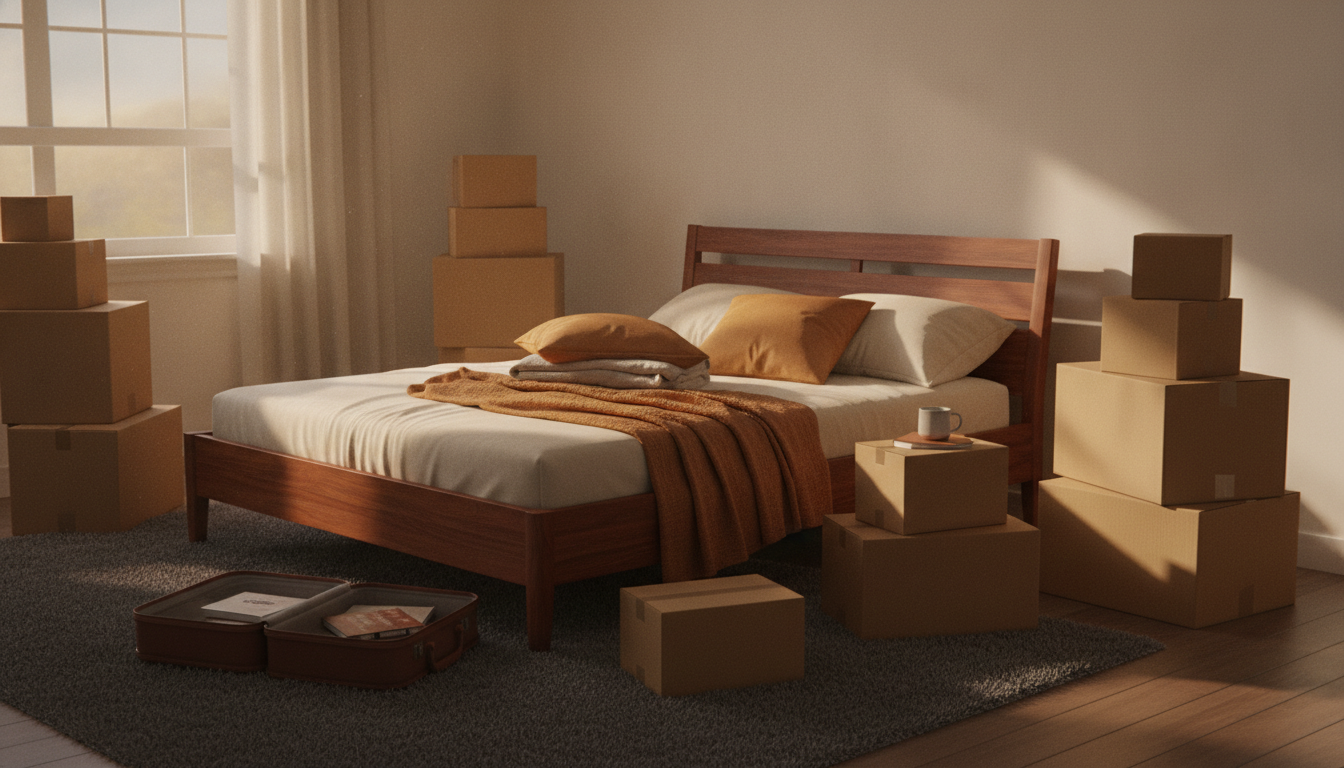
Disassemble the bed frame the night before your move — not the morning of. Here's the order:
- Strip all bedding and pillows (pack them the night before in labeled boxes)
- Remove the mattress and stand it against the wall
- Slide mattress into a mattress bag, seal it with tape
- Remove the box spring and bag it if you have one
- Disassemble the frame: remove slats, then rails, then headboard/footboard
- Put every bolt and screw into a labeled zip-lock bag and tape it to the headboard
Most bed frames — even large king frames — break down to pieces that two people can carry in one trip. Doing this the night before means your movers start moving, not assembling a furniture puzzle at $150+/hour.
Step 5: Protect and wrap the furniture
Dressers, nightstands, and armoires need protection on corners and surfaces. Your movers should supply moving blankets, but confirm this when you book. If you're doing a DIY move, rent furniture pads from a truck rental company (typically $10–15 per dozen per day).
For dressers with mirrors attached: detach the mirror if possible, wrap it separately, and move it as its own piece. An attached mirror on a moving dresser is a lever arm waiting to snap or crack.
Step 6: Label every box with purpose, not just room
Don't just write "bedroom." Write:
- "Bedroom / Hanging clothes — wardrobe box"
- "Bedroom / Bedding — OPEN FIRST"
- "Bedroom / Books + nightstand items"
- "Bedroom / Fragile — lamps"
Good labels mean whoever is unloading (you, friends, or professional movers) puts the right box in the right spot without asking. It saves 20–30 minutes of redirecting on a busy move day.
What to pack in your "open first" overnight kit
Before you seal the last bedroom box, pull out what you'll need for the first 24 hours and pack it in a single bag or clear tote that rides with you (not on the truck):
- Pillow and one set of bed sheets
- Phone charger and any bedside electronics
- Change of clothes and toiletries
- Any medications
- Mattress bag cutter or scissors
Bedroom packing timeline at a glance
| Days before move | Task |
|---|---|
| 7–10 days out | Declutter closet and dresser; order wardrobe boxes and mattress bag |
| 5–6 days out | Pack off-season clothes, books, wall décor, extra bedding |
| 3–4 days out | Pack lamps, photos, most clothes; disassemble non-essential furniture |
| Night before | Strip bed, bag mattress, disassemble frame, pack overnight kit |
| Morning of move | Carry overnight kit in personal vehicle; movers load furniture last |
Ready to book your move?
Whether you're moving across town or across the country, matching with the right crew makes the difference between a smooth move and a stressful one. Find movers near you or browse moving companies by state to compare vetted, licensed options in your area. You can also read verified mover reviews from real customers before you commit.
If you're pricing out your move, our 2026 moving cost breakdown explains exactly what you'll pay and why. And if you haven't nailed down your date yet, choosing the right moving date can save you hundreds on your final bill.
Have questions about your specific move? Chat with Robert, our AI moving assistant — he's on-site 24/7 to help you think through logistics, timing, and what to look for in a quote.
Frequently asked questions
How far in advance should I start packing my bedroom?
Start at least five to seven days before your move for a standard master bedroom, longer if you have a large closet or significant storage. The mistake most people make is treating the bedroom as a quick job they'll knock out the night before — it never is. Packing in stages over several days is less exhausting and results in better-labeled, better-organized boxes.
Should I leave clothes in dresser drawers when moving?
You can leave lightweight folded clothing in dresser drawers for a local move if the dresser isn't too heavy and the drawers won't slide open in transit (tape or stretch-wrap them shut). For long-distance moves, most professional movers will ask you to empty the drawers — a fully loaded dresser is very hard to handle safely on a truck ramp, and the weight can damage the drawer joints on a bumpy haul.
Do I need a mattress bag?
Yes — strongly recommended. A mattress bag ($15–35 depending on size) protects against dirt, moisture, and tears during transit and handling. Moving blankets alone don't seal out grime the way a bag does. A mattress that arrives dirty or damp is genuinely unpleasant and a bag is cheap insurance against it.
How do I move a king-size bed without damaging it?
Disassemble the frame completely the night before. Move the mattress and box spring separately (bagged). Wrap the headboard and footboard in moving blankets and carry them on edge, not flat. For very tall or ornate headboards, confirm your truck has enough interior clearance before moving day — a standard 26-ft moving truck typically has 8–9 feet of interior height, enough for most headboards.
What's the best way to move hanging clothes without wardrobe boxes?
Bundle 10–15 garments on their hangers, wrap a large garbage bag around them from the bottom with the hangers poking out through the tied opening, and transport them as a bundle. This keeps them wrinkle-free and clean. It's a bit more awkward to load than a wardrobe box, but it costs nothing and works well for a short move.
Are bedroom items covered if something breaks during the move?
Under federal FMCSA regulations, interstate movers are required to offer at minimum released-value protection at $0.60 per pound per article — this is free but provides very limited coverage. Full-value protection, which covers repair or replacement at current market value, is available for an additional charge and varies by carrier. For intrastate (in-state) moves, coverage rules vary by state. Always ask your mover in writing what liability option is included in your quote, and check whether your homeowner's or renter's insurance covers items in transit.
Tagged