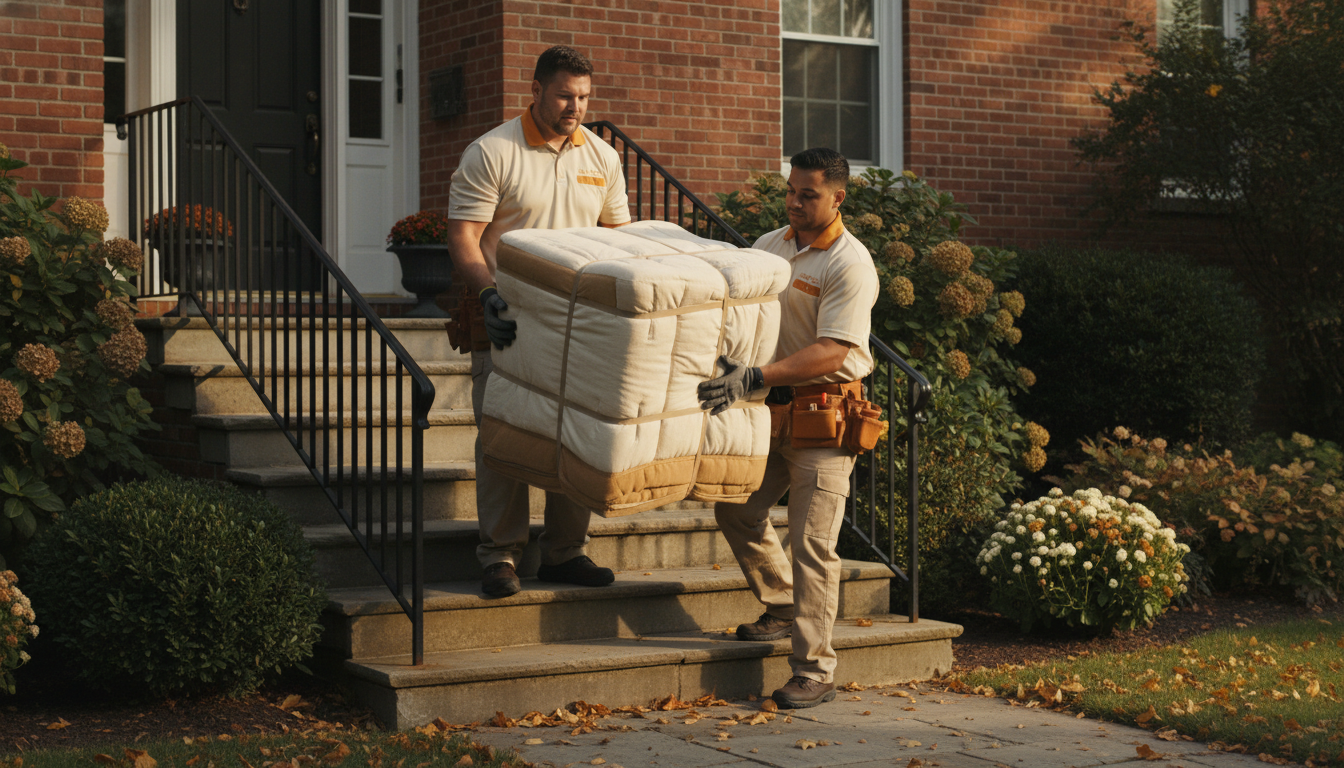
Moving a storage unit is one of the most underestimated parts of any relocation. The smartest approach is to treat your storage unit as a separate move entirely — plan at least two dedicated visits before moving day, sort aggressively, and load it last onto the truck so it comes off first at your destination. Done right, clearing a unit adds a few hours to your move. Done wrong, it can double your bill.
We've helped thousands of families over the years who discovered — too late — that the "small unit" they'd been renting for $80 a month had quietly become a warehouse. Here's what we've learned about doing this the right way.
Why Moving a Storage Unit Catches People Off Guard
Storage units are where stuff goes to be forgotten. A 10×10 unit feels modest until you realize it holds the equivalent of a one-bedroom apartment's worth of belongings — roughly 600–800 cubic feet. A 10×20 unit rivals a two-car garage. Movers charge by weight and time, so what's in that unit matters enormously to your final bill.
Before you do anything else, go stand inside your unit and take an honest inventory. Take photos. You need to know what you're working with before you can plan.
Step 1: Schedule Two Pre-Move Visits — Minimum
Visit 1 (at least 3–4 weeks out): Sort and purge. Pull everything forward into the light. Make three piles: keep, donate/sell, and trash. Be ruthless. A $120 donation-center pickup of old furniture costs far less than paying movers to haul it across town or across the country. Items you haven't touched in two years are good purge candidates.
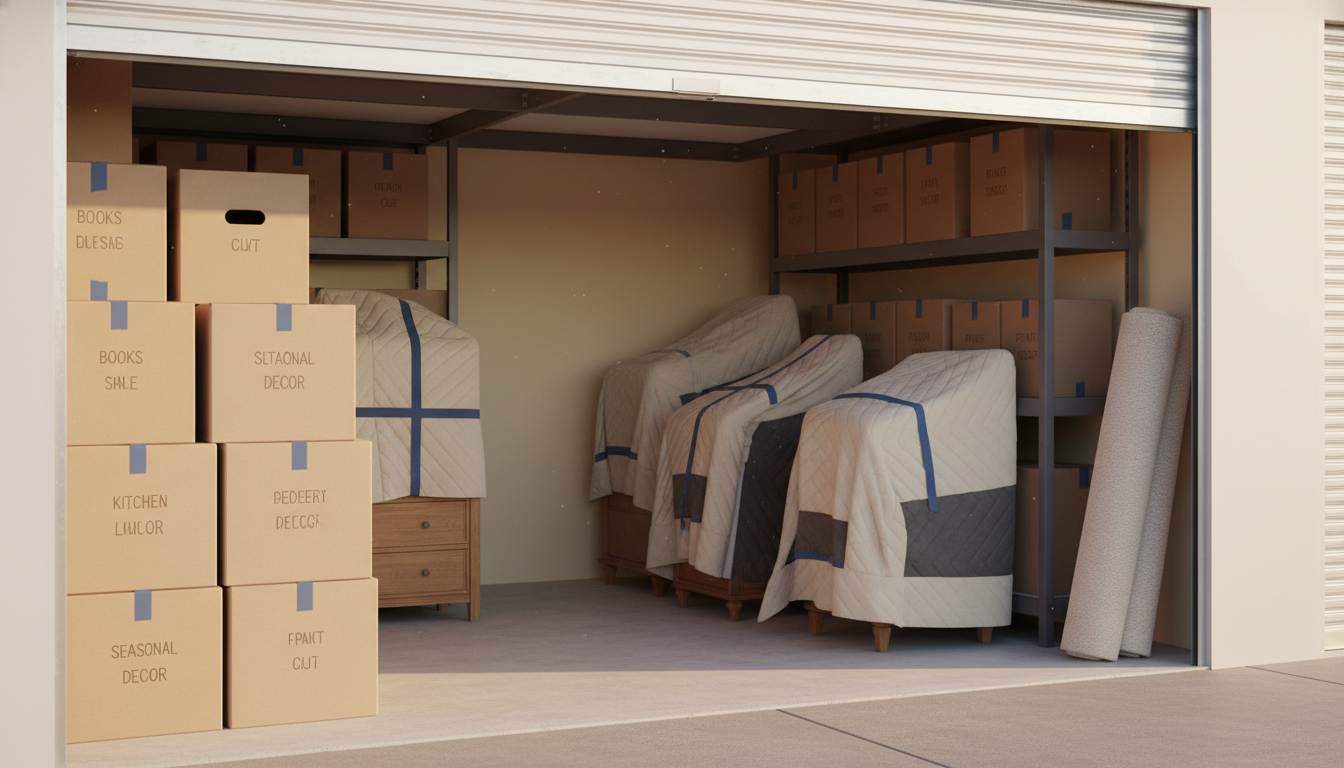
Visit 2 (1–2 weeks out): Pack and label. Bring boxes, packing tape, stretch wrap, and moving blankets. Pack loose items into boxes. Wrap furniture corners. Label every box with both its contents and its destination room — not just "misc." This is the single step people skip that causes the most chaos on moving day.
If you're already deep into planning your overall move, our guide on how to declutter before a move and cut your moving bill has an approach that works just as well for storage units as it does for kitchens.
Step 2: Measure What You Have (So You Can Book the Right Truck)
Eyeballing a storage unit is how people end up with a truck that's too small. Here's a quick reference:
| Storage Unit Size | Approx. Contents | Truck Size Needed |
|---|---|---|
| 5×5 (25 sq ft) | Small items, boxes only | Cargo van or 10 ft truck |
| 5×10 (50 sq ft) | Studio apartment contents | 10–15 ft truck |
| 10×10 (100 sq ft) | 1-bedroom apartment | 15–20 ft truck |
| 10×20 (200 sq ft) | 2–3 bedroom home | 20–26 ft truck |
| 10×30 (300 sq ft) | Large home, vehicle storage | 26 ft truck or two loads |
If your storage unit is one stop among several on moving day, tell your mover upfront and ask how they handle multi-stop moves. Most local movers charge a flat stop fee of $50–$150 per additional location; long-distance movers may charge by weight added per pickup point. Knowing this in advance prevents billing surprises — see our full 2026 moving cost breakdown for what to expect.
Step 3: Load the Storage Unit Last (or First — Know the Difference)
This is one of the most practical things we can tell you: the last thing loaded onto a truck is the first thing off. So think about where your storage items are going at your destination.
- If storage items go to your new home: Load the unit last so those boxes come off first and don't block furniture.
- If storage items are going into a new storage unit at your destination: Load them first so they ride at the back of the truck and transfer out quickly at the end.
Brief your moving crew on this plan before they start loading. A good mover will appreciate the heads-up. If you're not sure how to communicate clearly with your crew, our moving day room-by-room checklist has a section on exactly this.
Step 4: Protect Furniture and Oddly Shaped Items
Storage units are notorious for housing the items that don't fit neatly in boxes — armchairs, mattresses, lamps, exercise equipment. These need attention before they go on a truck:
- Mattresses: Always use a mattress bag ($5–$15 at any moving supply store). A bare mattress picks up grime, moisture, and odors fast in a truck.
- Upholstered furniture: Stretch wrap is your friend. Two or three layers keeps fabric clean and legs from snagging on other items.
- Mirrors and framed art: If you don't have the original boxes, use mirror boxes (typically $8–$20) or sandwich between two moving blankets and mark "FRAGILE – THIS SIDE UP" clearly. Our detailed guide on packing and moving fragile items without breaking a thing walks through exactly how to do this.
- Disassembled furniture: Keep all hardware (bolts, screws, Allen keys) in a labeled zip-lock bag taped directly to the furniture piece. This is the detail people forget every single time.
Step 5: Don't Forget the Administrative Side
Storage units have lease agreements, and moving out mid-month is where hidden costs live.
- Give proper notice. Most storage facilities require 10–30 days written notice before vacating. Skipping this typically means forfeiting your deposit or being billed for another month, often $80–$300 depending on your market and unit size.
- Check your auto-pay. If your unit is on automatic billing, cancel it after you've confirmed the unit is empty and you've received a written move-out confirmation. We've seen people billed for empty units for months because they forgot this step.
- Insurance. Your storage facility likely required you to carry a renters or storage policy. Once the unit is empty, contact your insurer to cancel that coverage. Don't pay for it after you've moved out.
- Return your lock. Some facilities rent locks and will charge you if it isn't returned.
What This Typically Costs: Adding a Storage Unit to a Professional Move
Costs vary by region, but here are realistic ranges based on what we've seen:
| Scenario | Typical Added Cost |
|---|---|
| Local move, 10×10 unit added as a stop | +$100–$300 (1–2 hrs extra labor) |
| Local move, 10×20 unit as primary origin | $400–$900 total for a half-day move |
| Long-distance, adding a storage pickup | +$150–$500+ depending on weight added |
| DIY truck rental for a 10×10 unit | $50–$120/day plus mileage + fuel |
If you're moving locally and the storage unit is your only origin point, you may be surprised at how affordable a professional crew can be. Find movers near you to compare quotes — always get at least three.
Frequently Asked Questions
Can movers pick up from a storage unit and deliver to my new home in the same trip?
Yes, and this is extremely common. Tell every mover you quote that you have a storage unit stop, give them the address, and ask whether they charge a multi-stop fee. Most local movers charge $50–$150 per additional stop. For long-distance moves, the pickup may add weight-based charges. Always get this in writing before you book.
How far in advance should I start clearing out my storage unit before moving?
Start at least three to four weeks before your move date. That gives you time for a proper purge visit, a packing visit, and a buffer in case you need to arrange donation pickups or junk removal for items you're not keeping. Trying to clear a unit the week of your move almost always costs you time — and time costs money when movers are on the clock.
Do I need to empty the storage unit before movers arrive, or will they do it?
Professional movers will load what's in the unit, but they won't sort, purge, or organize it for you — nor should you want them to. That's your job, done in advance. If items aren't boxed or wrapped when movers arrive, they'll either wrap them on-site (which adds time and labor cost) or flag them as items they won't move for liability reasons. Come prepared.
Is it cheaper to move a storage unit myself versus hiring movers?
For a small unit (5×5 or 5×10), a DIY truck rental is often the most economical choice — typically $50–$120 for the day, not counting fuel. For anything 10×10 and larger, professional movers often match or beat the true DIY cost once you factor in truck rental, fuel, mileage fees, your own labor, and any help you'd need to hire. Use our browse movers by state tool to get a sense of what professional rates look like in your area before you decide.
What happens if I leave items in the storage unit after my move-out date?
Most facilities have a formal abandonment or lien process. Typically, after 30–60 days of non-payment, your items can be auctioned off under your state's self-storage lien laws. You'll also be reported to collections for unpaid rent. Don't let this happen — schedule a junk removal service for anything you can't move yourself if you're running out of time.
Should I use the same movers for both my home and my storage unit?
Generally, yes. Using the same crew for both simplifies scheduling, pricing, and liability. Some movers will discount multi-stop moves, especially when the stops are within a few miles of each other. When you're reading verified mover reviews, look specifically for mentions of multi-stop or storage-unit experience — it tells you whether a company has actually done this before.
Moving a storage unit doesn't have to be the chaotic afterthought it often becomes. Plan early, purge hard, pack smart, and brief your crew. If you're ready to find a mover who's done this a hundred times before, browse verified moving companies in your area — or ask Robert, our AI moving assistant, any question you have about planning your move. He's on the site and ready to help.
Tagged