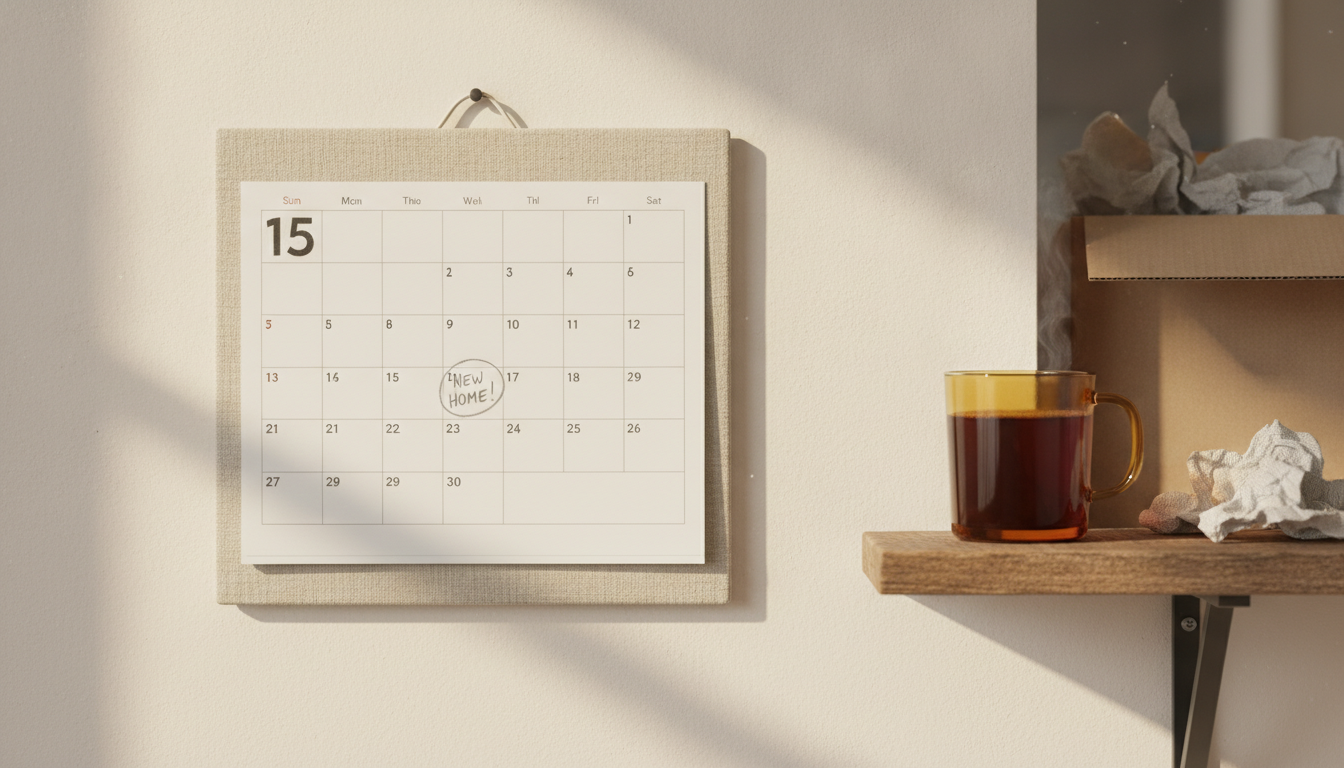
Moving day goes smoothly when you treat it like a managed operation, not a scramble. The single biggest reason moves go sideways isn't the truck or the crew — it's the homeowner who hasn't made decisions in advance. Walk through this checklist the night before and the morning of your move, and you'll spend your energy directing, not panicking.
What should you do the night before moving day?
The night before is your last real window to set yourself up. By 9 p.m., these five things should be done:
- Charge every device — phones, tablets, earbuds. You will be on calls all day.
- Set aside your "open first" box — toilet paper, paper towels, one set of bedding per person, phone chargers, basic toiletries, two days of medications, snacks, and a box cutter. Label it in bright marker and keep it in your personal vehicle, never on the truck.
- Confirm your crew and arrival window — call or text the moving company to confirm the start time, number of movers, and truck size. Miscommunications about a 8 a.m. vs. 9 a.m. arrival have derailed more moves than we can count.
- Defrost the freezer — if you haven't already, unplug it now. A wet floor on move morning slows everything down.
- Pack a cash float — tips for movers are customary (typically $20–$50 per mover for a local move, $50–$100 each for a full-day long-distance job). ATMs at new addresses are often an unknown.
What's the right order to load a moving truck?
Professional crews load heaviest and largest items first, against the cab wall. If you're supervising or doing a DIY move, follow this sequence:
- Appliances and large furniture (sofas, bed frames, dressers, washer/dryer)
- Heavy boxes — books, tools, pantry items — stacked on the floor
- Medium boxes — kitchen goods, linens, small appliances
- Lightweight and fragile boxes — on top, never under anything
- Mattresses and mirrors — loaded vertically, on edge, against a side wall
- Lamps, artwork, and awkward items — last in, first out
Loading in the wrong order is the #1 cause of box crushing and furniture scratching. If you've hired a crew, let them set the load sequence — but don't hesitate to flag anything fragile you're worried about.
Room-by-room moving day checklist
Work through each room in this order. Check off tasks as you go — physically, on paper or your phone.
Kitchen
- Refrigerator emptied, unplugged, and doors propped open
- All cabinet doors checked — we've seen so many "surprise" spice jars left behind
- Small appliances (coffee maker, toaster) wrapped and boxed
- Cleaning supplies separated — many movers won't transport bleach or ammonia-based products
If your kitchen pack isn't done, our guide on how to pack a kitchen in 48 hours covers the fastest method we know for getting it wrapped up under pressure.
Bedrooms
- Mattress bags on (purchase at any hardware store, ~$10–$20 each — worth every penny)
- All dresser drawers emptied or secured with stretch wrap if the mover allows
- Closets checked top-shelf to floor, including under beds and inside ottomans
- Jewelry, documents, and irreplaceable items moved to your personal vehicle — never the truck
Bathrooms
- Medicine cabinet fully cleared — these are almost always forgotten
- Toiletries for the next 48 hours separated into your personal bag
- Shower curtain and rod removed if you're taking them
Living and dining rooms
- Art and mirrors wrapped in mirror boxes or padded with moving blankets
- TV disconnected; cables labeled with blue tape before coiling
- Bookcases emptied — movers can often move the empty case, but check with your crew first
Garage, basement, attic
- Hazardous materials removed — gasoline, propane, paint cans, pool chemicals. These cannot go on a licensed moving truck under FMCSA regulations (49 CFR Part 173). Dispose of or transport them yourself.
- Power tools have fuel drained
- Seasonal items you're keeping are labeled by room destination
What to do while the movers are loading
This is not the time to supervise from a lawn chair. Here's where to put your attention:
- Stay available and on-site — movers need decisions made in real time (does this shelf go, or is it trash?).
- Do a slow walk of every room after the crew clears it — open every closet, cabinet, and drawer. We call this the "ghost room" check.
- Photograph any item you're concerned about before it goes on the truck — this creates a timestamped record if a damage claim becomes necessary. Under FMCSA rules (49 CFR Part 375), interstate movers are required to offer two liability options: Released Value (free, but only $0.60/lb per item) and Full Value Protection (costs extra but covers repair or replacement). Know which one you selected before moving day. You can review the full cost picture in our 2026 moving cost breakdown.
- Protect your floors and walls — ask the crew about floor runners and door frame padding. Most professional companies bring these; confirm in advance.
What to do when the truck leaves for your new place
- Do your final walkthrough — every room, every closet, the attic, the backyard.
- Check all windows are locked, lights are off, and HVAC is set to the landlord/buyer's agreed setting.
- Hand over keys as arranged — don't lock yourself out before doing steps 1 and 2.
- Drive your own route to the new address — don't assume the truck will beat you there.
At the destination, direct movers to place furniture in the correct rooms immediately. Repositioning a sofa after the crew has left costs you time and a sore back. Have a simple hand-drawn floor plan ready — even a napkin sketch works.
How do you handle problems on moving day?
Even well-planned moves hit snags. Here's how to handle the most common ones:
| Problem | First step | Escalation |
|---|---|---|
| Crew arrives late | Call the company dispatch directly | Note the delay in writing (text/email) for potential billing adjustment |
| Item is damaged during loading | Photograph immediately, note it on the Bill of Lading before signing | File a formal claim within the window stated in your contract (often 9 months for interstate moves) |
| Elevator or parking access denied | Contact your building manager — book service elevator in advance next time | Ask movers if they charge a "long carry" or "stair fee" and negotiate a delay credit |
| Mover asks for more money on delivery | For interstate moves, you can legally pay no more than 110% of a non-binding estimate at delivery (FMCSA "110% rule") | Dispute excess charges in writing immediately |
Before any of these situations arise, reading 10 questions to ask before hiring a moving company will help you vet your crew in advance and know your contractual rights.
Moving into a new city?
If you're relocating to a new metro — say, moving to Charlotte, settling in Nashville, or heading to Denver — local regulations, parking permit requirements, and building move-in windows vary widely. Check with your destination city's permit office at least one week out. Many cities require a parking-lane block permit ($25–$75 typically) for a moving truck.
To find licensed, vetted crews in your destination area, browse movers by state or find movers near you on our directory.
Frequently asked questions
What time should movers arrive on moving day?
Most professional crews start between 8 a.m. and 9 a.m. For a 2–3 bedroom home, plan for 4–8 hours of load time. Starting early gives you daylight, avoids afternoon heat in summer months, and leaves buffer for delays. Confirm the exact arrival window with your mover 24 hours in advance.
Should I be home during the entire move?
Yes — especially during loading. You're the decision-maker for anything unclear, and you need to do room checks as spaces are cleared. If you must step away briefly, designate a trusted adult to be your stand-in on-site.
What items can't go on the moving truck?
Under FMCSA regulations, licensed interstate movers cannot transport hazardous materials including gasoline, propane, flammable paints, ammonia, pool chemicals, and loaded firearms. Some movers also decline perishable food and live plants on long-distance hauls. Confirm your mover's specific restricted items list when you book.
How much should I tip movers?
Tipping is customary but not required. For a local move, $20–$50 per mover is typical. For a long, physically demanding long-distance job, $50–$100 per mover is reasonable. Tip in cash at the end of the job after the truck is unloaded — not before.
What do I do if something is damaged during the move?
Photograph the damage immediately and note it on the Bill of Lading before you sign it. Then file a written claim with the moving company within the timeframe stated in your contract. For interstate moves, FMCSA requires carriers to acknowledge claims within 30 days and resolve or deny within 120 days. Keep all documentation.
How far in advance should I book movers for moving day?
For moves during peak season (May through September) or on weekends, book 4–6 weeks out. Off-peak weekday moves can often be booked 1–2 weeks out. The earlier you book, the more leverage you have on scheduling and sometimes pricing. See our before you book guides for more on timing your move strategically.
Need a vetted crew for your move? Browse verified mover reviews on our directory, or ask Robert, our AI moving assistant, any question you have about planning your move — he's on the site around the clock.
Tagged